SAMPLE AND DEMONSTRATION ONLY. Illustrative analysis of publicly available information, prepared by BI Consulting Services. Not affiliated with, endorsed by or produced for any company shown.
Demonstration · Illustrative data · BI Consulting Services
WHP Global× BI Consulting Services
Prepared for Dan
Director FP&A · WHP Global · 530 Fifth Ave, New York
September 2026

The brand-portfolio FP&A board — one royalty ledger across WestEnd, NetSuite and NSPB

Royalty revenue by brand and licensee, guaranteed minimums against actuals, budget vs forecast, and licensee reporting completeness — with row-level security that decides what a CFO, a brand lead and an external licensee each see of the same model. Switch the role above the board to watch it happen.

RLS: full portfolio · 16 brands

Brand constellation — 16 brands, sized by retail sales, ringed by licensees

Each node is a brand (area ∝ retail sales in the selected period). Dots on the ring are licensees; filled gold = every monthly sales report received, stone = late, hollow = missing. Hover a brand.

WestEnd · brand master
Licensee reported every monthReported lateReport missingHidden by row-level security
1

Royalty revenue — actual vs budget vs NSPB forecast

Monthly, Jan 2025 – Sep 2026 · $M recognised (actual royalties with GMR floor applied)

NetSuite · NSPB
ActualBudgetNSPB forecastSelected period
2

GMR vs actual royalties

Bullet per brand · stone band = guaranteed minimum · gold bar = actual earned royalty · tick = budget

WestEnd
3

Budget vs actual vs forecast

Royalty revenue $M · NSPB budget and latest forecast cycle

NSPB
4

Licensee sales-reporting completeness

Monthly sales reports received per licensee · the input every royalty accrual depends on

WestEnd · portal uploads
5

Territory mix

Retail sales and royalty by licensed territory

WestEnd
6

EBITDA bridge — budget to actual

$M · volume, rate & mix, GMR floor and operating-expense variances

NetSuite GL · NSPB
7

What this board answers

Three questions FP&A gets asked every close

    8

    Ask the data

    Natural-language layer over the same semantic model — answers inherit the viewer's row-level security

    Mock · Copilot-style
    9

    How it would be built — sized for 50–80 users, not for a data-platform bill

    The three systems already in the building, landed once into a lake, modelled once, secured once.

    Architecture

    Sources

    • WestEnd — contracts, GMRs, licensee sales reports, royalty calcs
    • NetSuite — GL, AR, invoicing, entities
    • NSPB — budget, rolling forecast, driver models
    →

    Azure data lake · incremental

    Scheduled extracts land as parquet; only changed months are reprocessed. One conformed brand / licensee / territory / period spine so every panel above reconciles to the same numbers.

    →

    Power BI semantic model + RLS

    One model, three security roles (what you just switched between): CFO sees the portfolio, brand leads see their brands, licensees see only their own contract through a shared workspace app — no second model, no duplicate reports.
    10Three source systems, one semantic model, 3 RLS roles covering 50–80 named users — the licensee role alone replaces the monthly royalty-statement emails to every licensee on the constellation.

    Also from BI Consulting Services

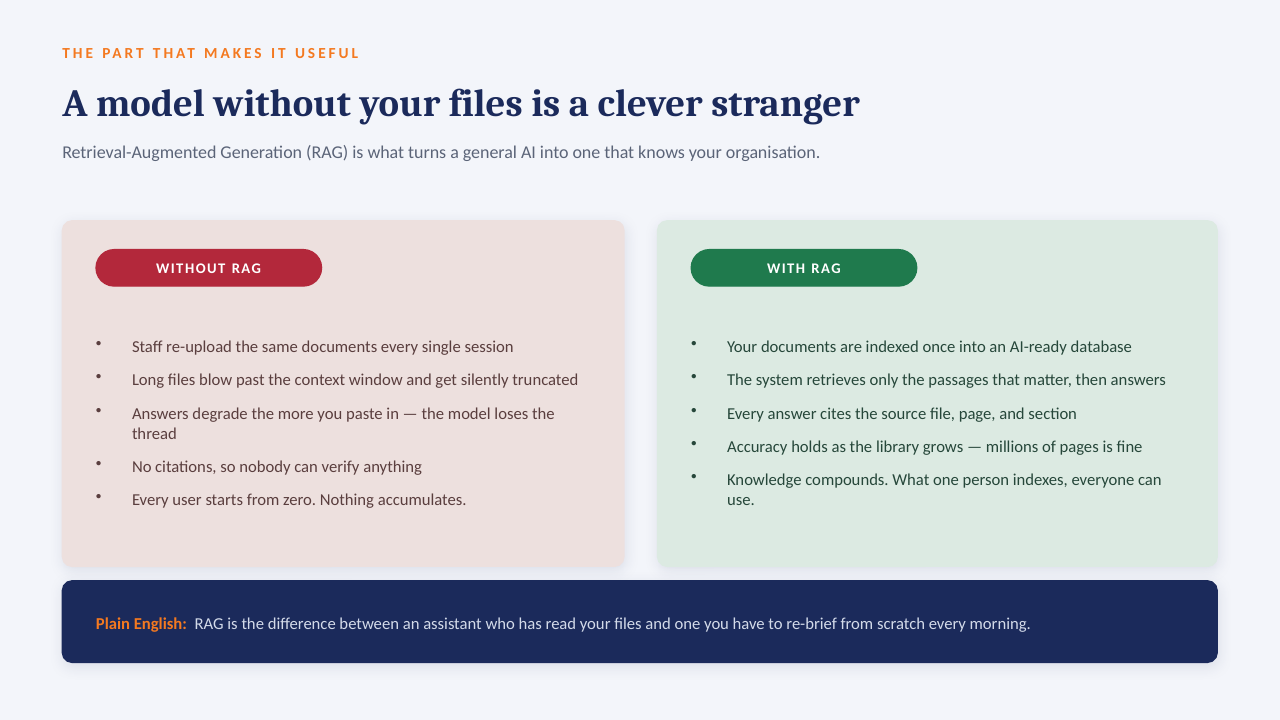
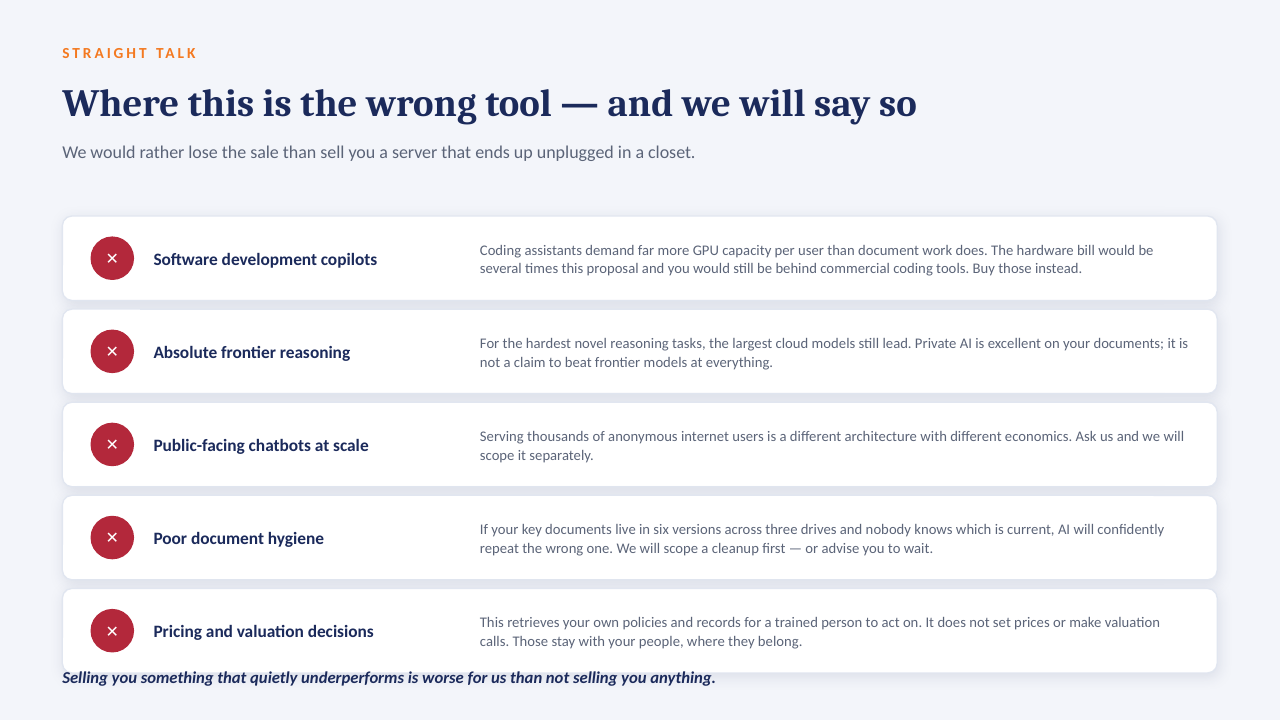
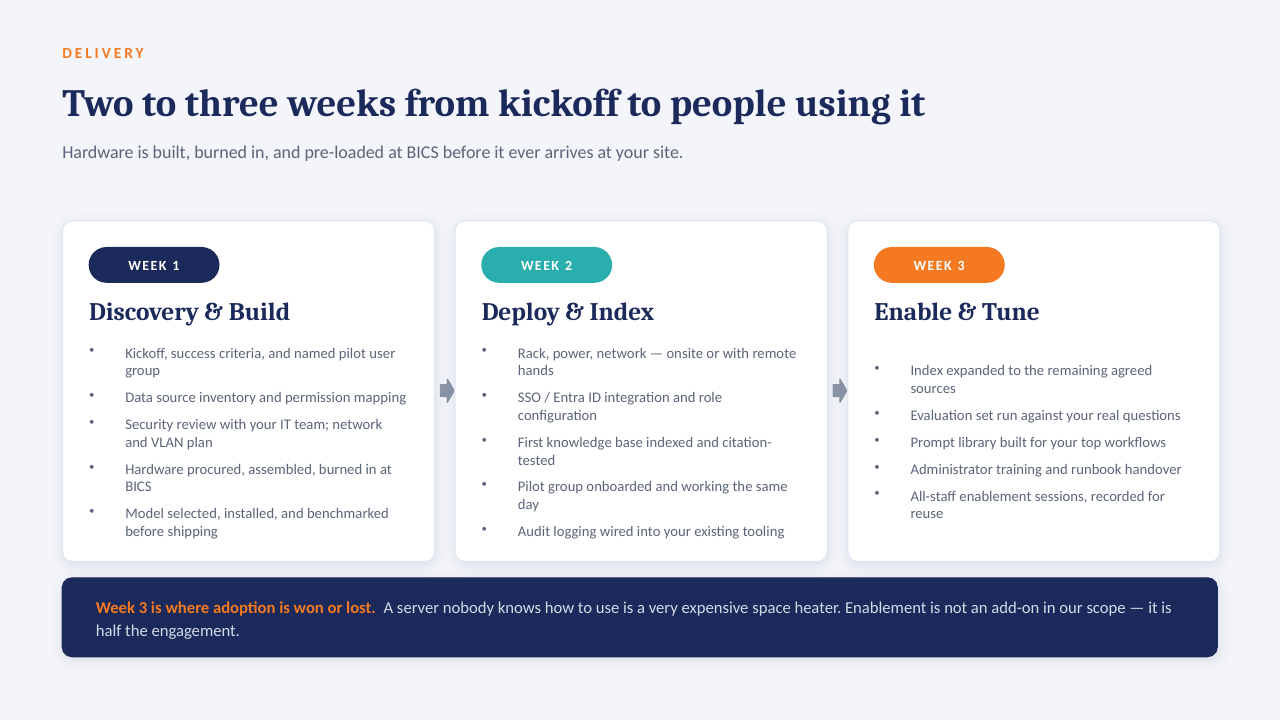
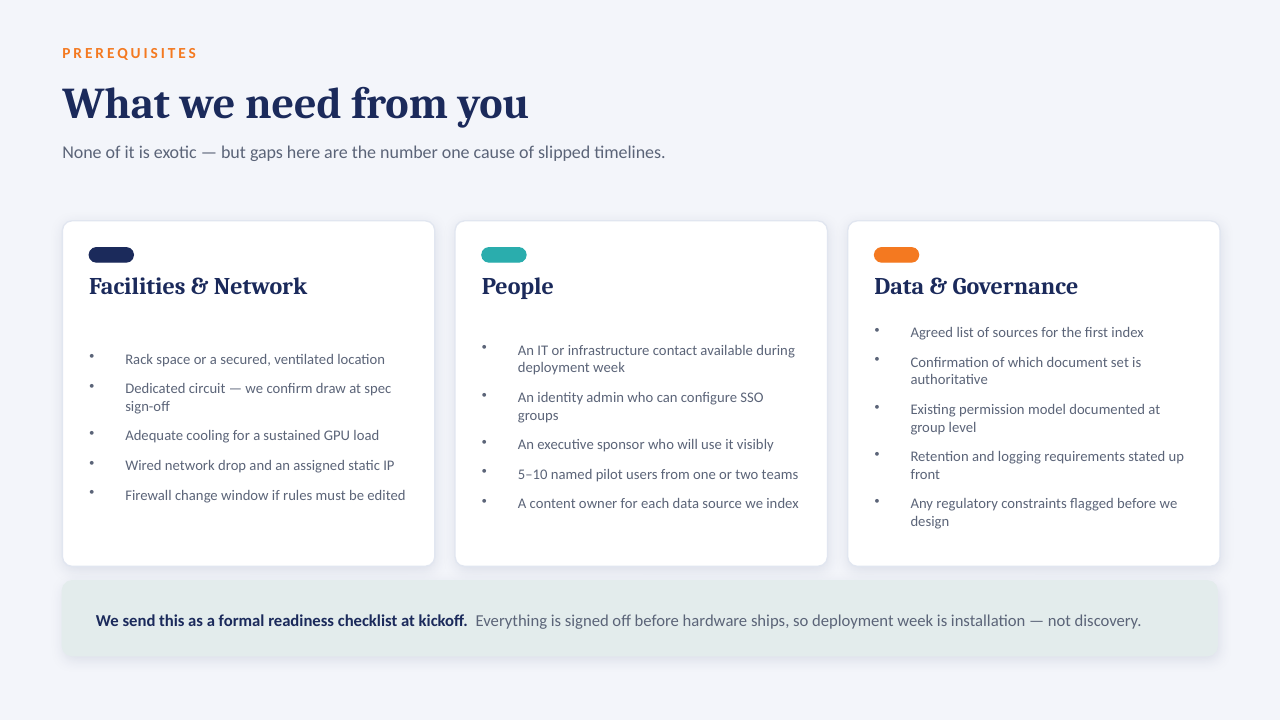
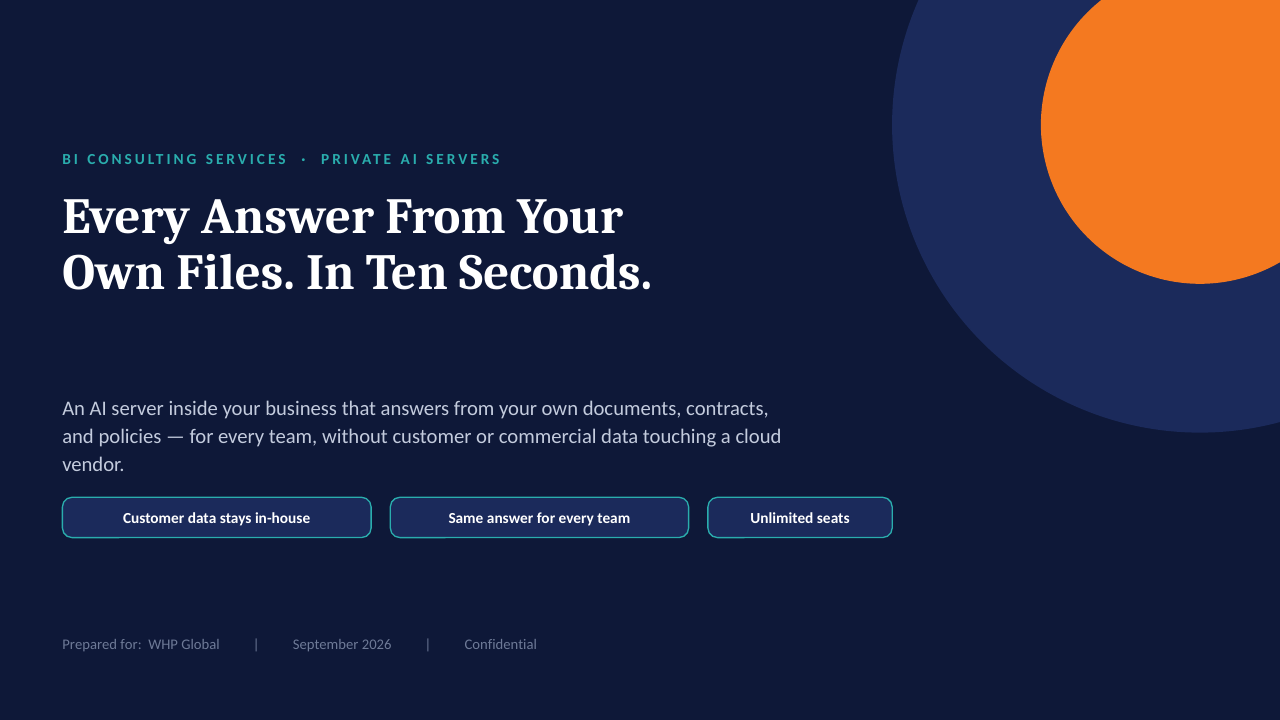
    Private AI on your own server

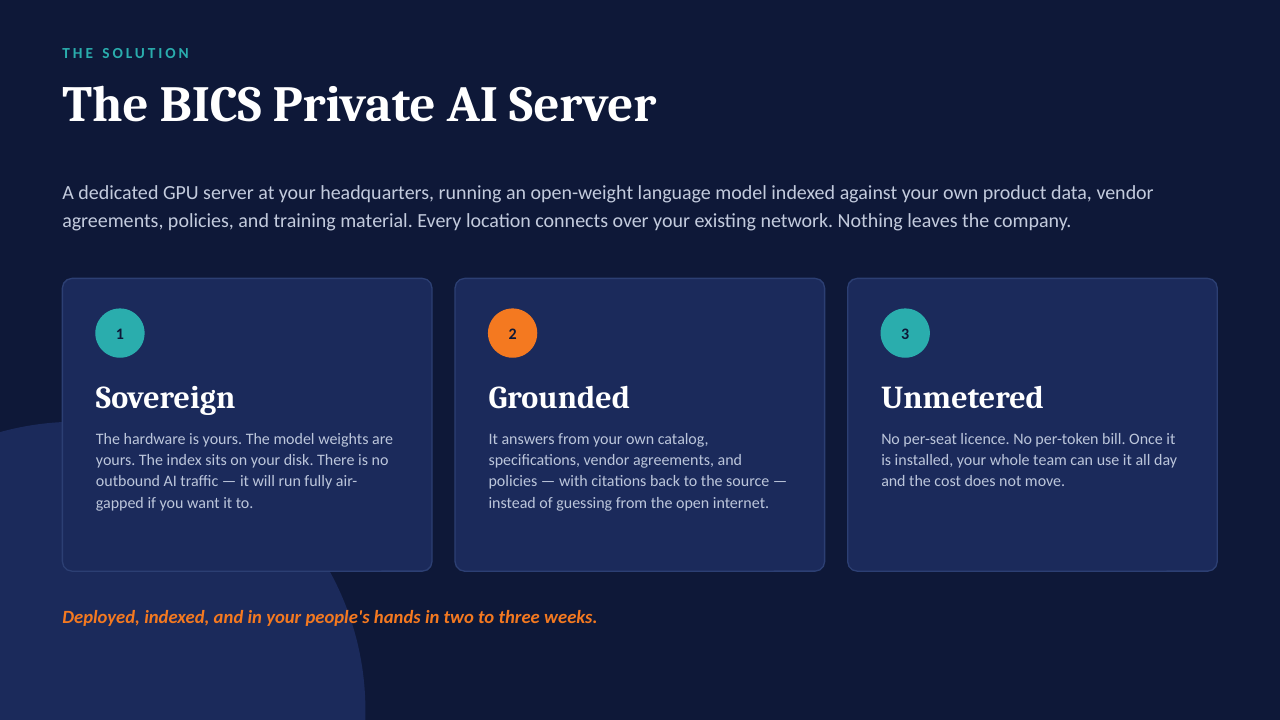
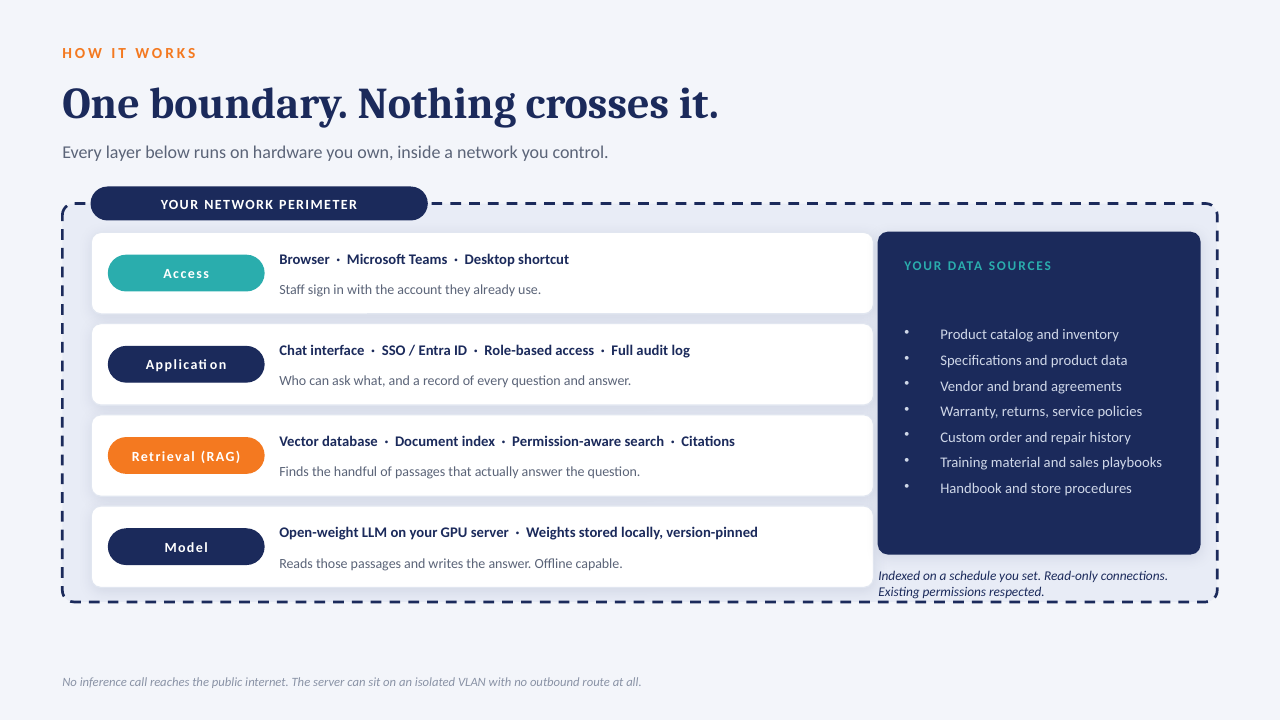
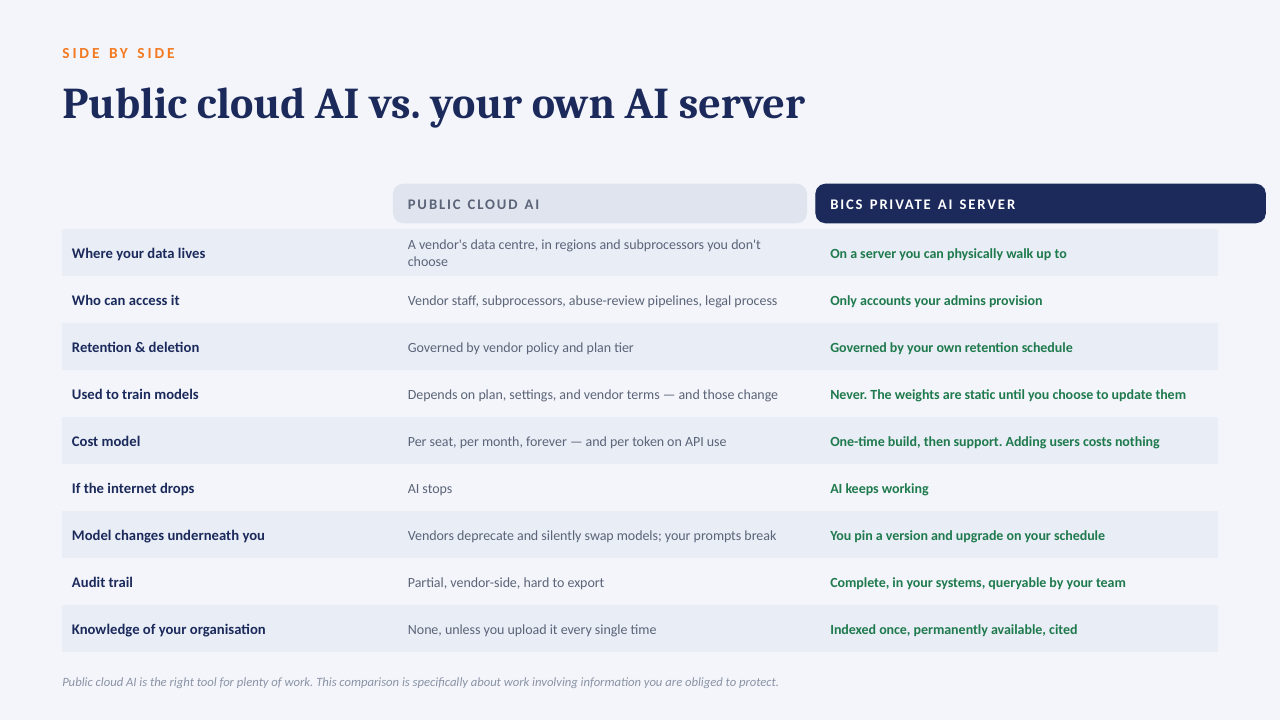
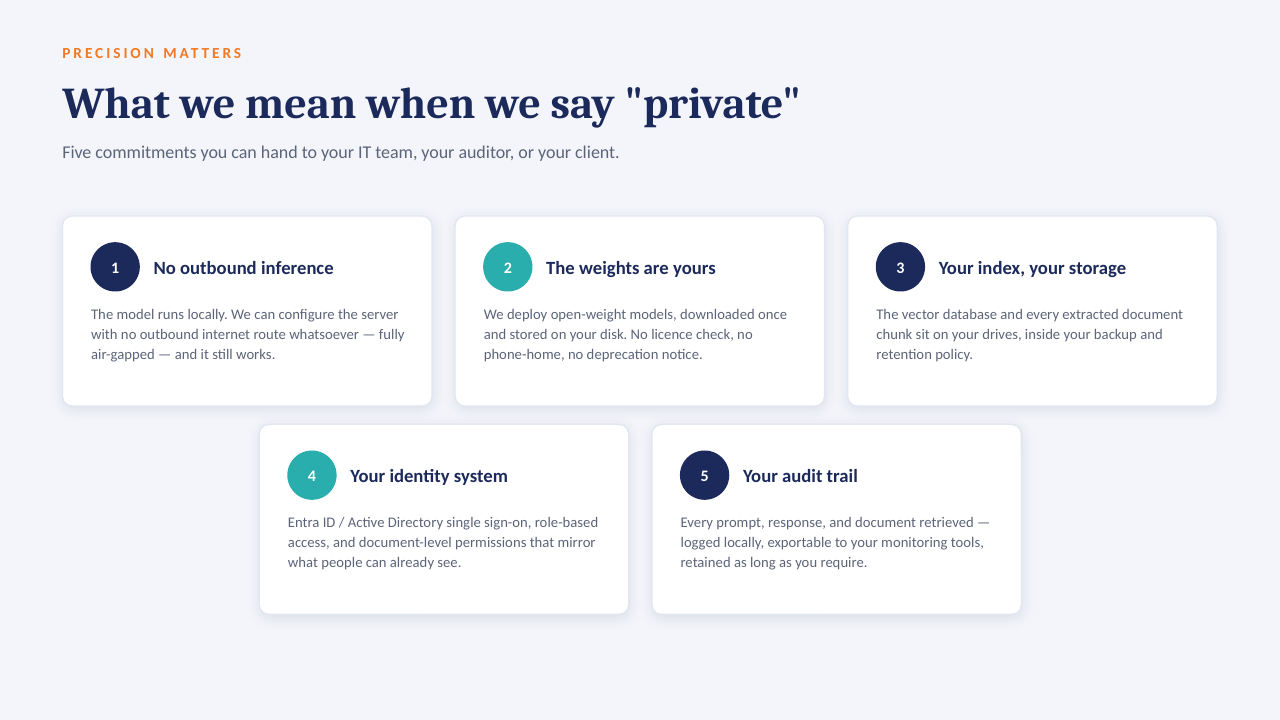
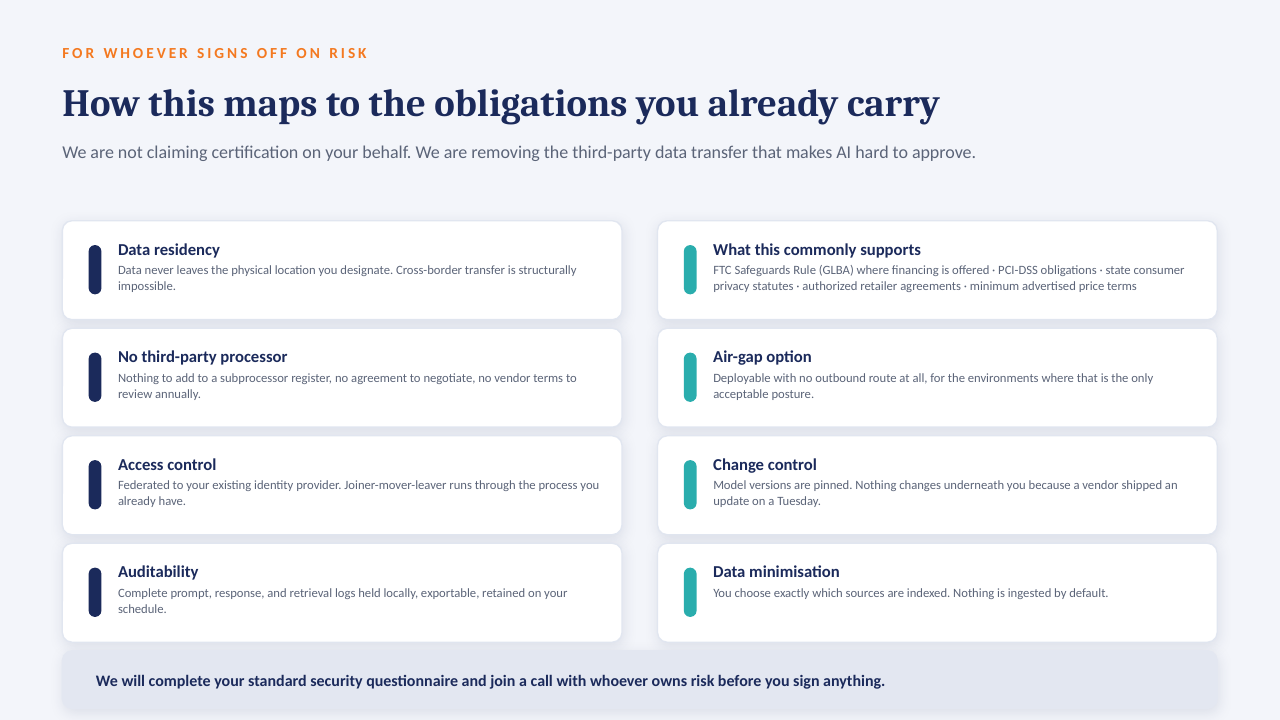
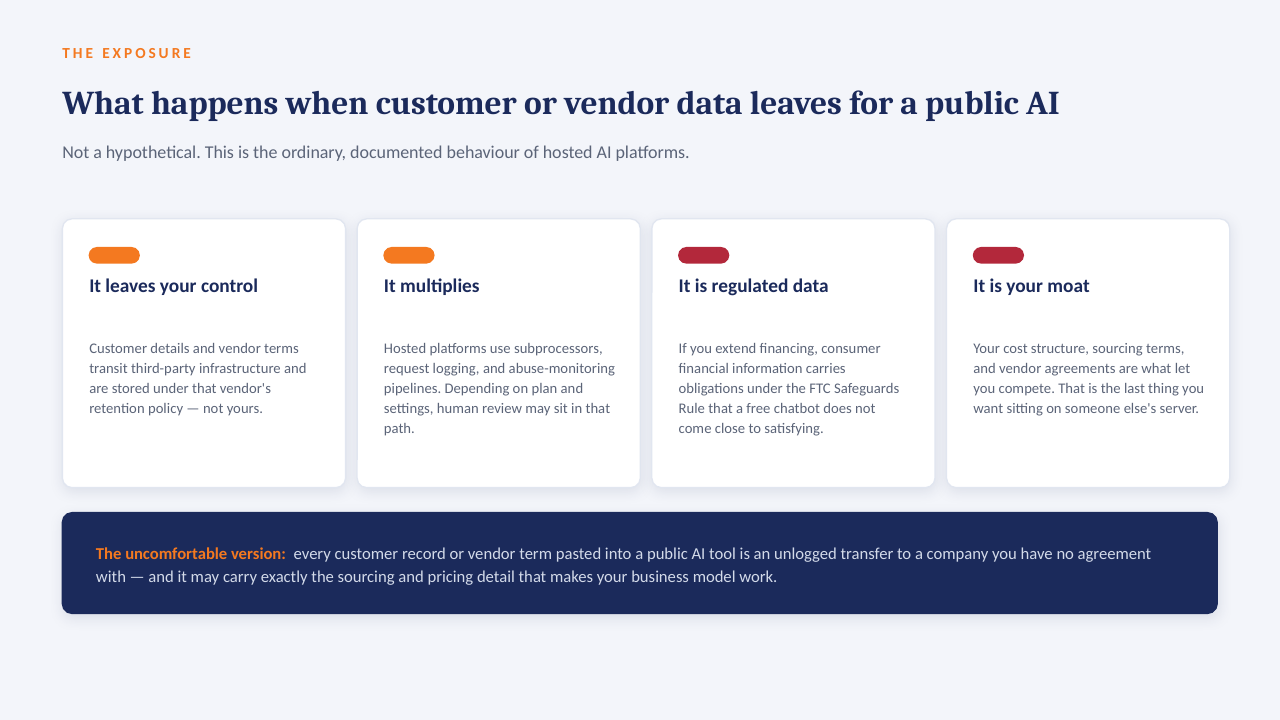
    The "ask the data" panel above is built to run on a GPU server inside your own network: an open-weight model over your own documents, with every answer citing the file it came from. No per-seat licence, works offline, and nothing leaves the building.

    How it sits in your environment

    YOUR NETWORK · NOTHING LEAVES THE BUILDING Your files policies · SOPs · contracts reports · ERP exports indexed locally GPU One server, in your building open-weight model · your data only in seconds Cited answers every reply links to the source file and page no cloud AI · no third-party processor
    One appliance-class server on your rack or in a secured closet. Your files are indexed where they already live; the model runs locally; answers come back with the source page attached.

    What that means in practice

    1. 1
      Your data only, on your hardwareAn open model over your own documents and exports. No third-party AI processor, no data-transfer agreement to review.
    2. 2
      Every answer cites its sourceReplies point to the file and page they were drawn from, so people check the answer instead of trusting it blind.
    3. 3
      No per-seat licenceThe whole team can ask questions. Cost is the server and our build, not a monthly number that grows with headcount.
    4. 4
      Works offlineIf the internet connection goes down, the answers still come. Nothing depends on a vendor's uptime or pricing changes.

    The short deck

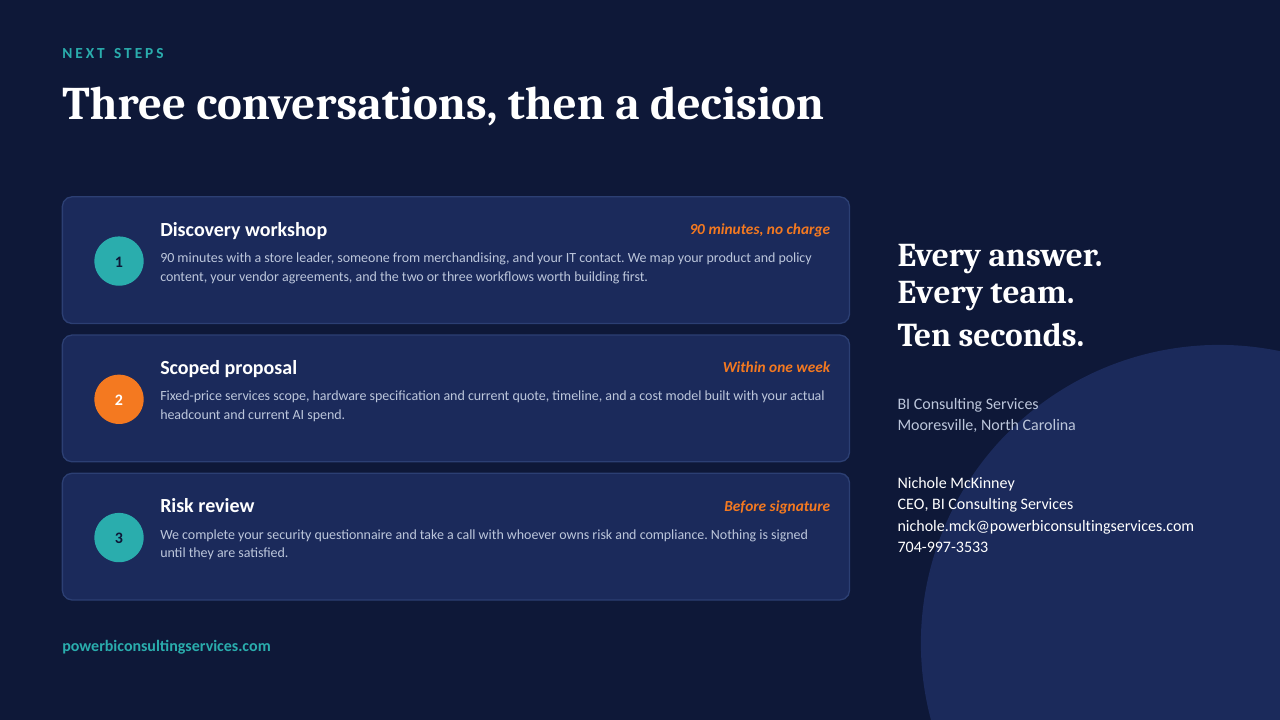
    14 slides on how a private AI server is scoped, secured and rolled out. Click through, or take the PDF.

    Download the PDF
    Private AI on your own server — slide 1 of 14 Private AI on your own server — slide 2 of 14 Private AI on your own server — slide 3 of 14 Private AI on your own server — slide 4 of 14 Private AI on your own server — slide 5 of 14 Private AI on your own server — slide 6 of 14 Private AI on your own server — slide 7 of 14 Private AI on your own server — slide 8 of 14 Private AI on your own server — slide 9 of 14 Private AI on your own server — slide 10 of 14 Private AI on your own server — slide 11 of 14 Private AI on your own server — slide 12 of 14 Private AI on your own server — slide 13 of 14 Private AI on your own server — slide 14 of 14
    1 / 14Tap or click a slide to advance · arrow keys work too

    Worth a conversation? Book 30 minutes with NicholeBI Consulting Services · powerbiconsultingservices.com